
Middle East Escalation Disrupts Air and Ocean Freight
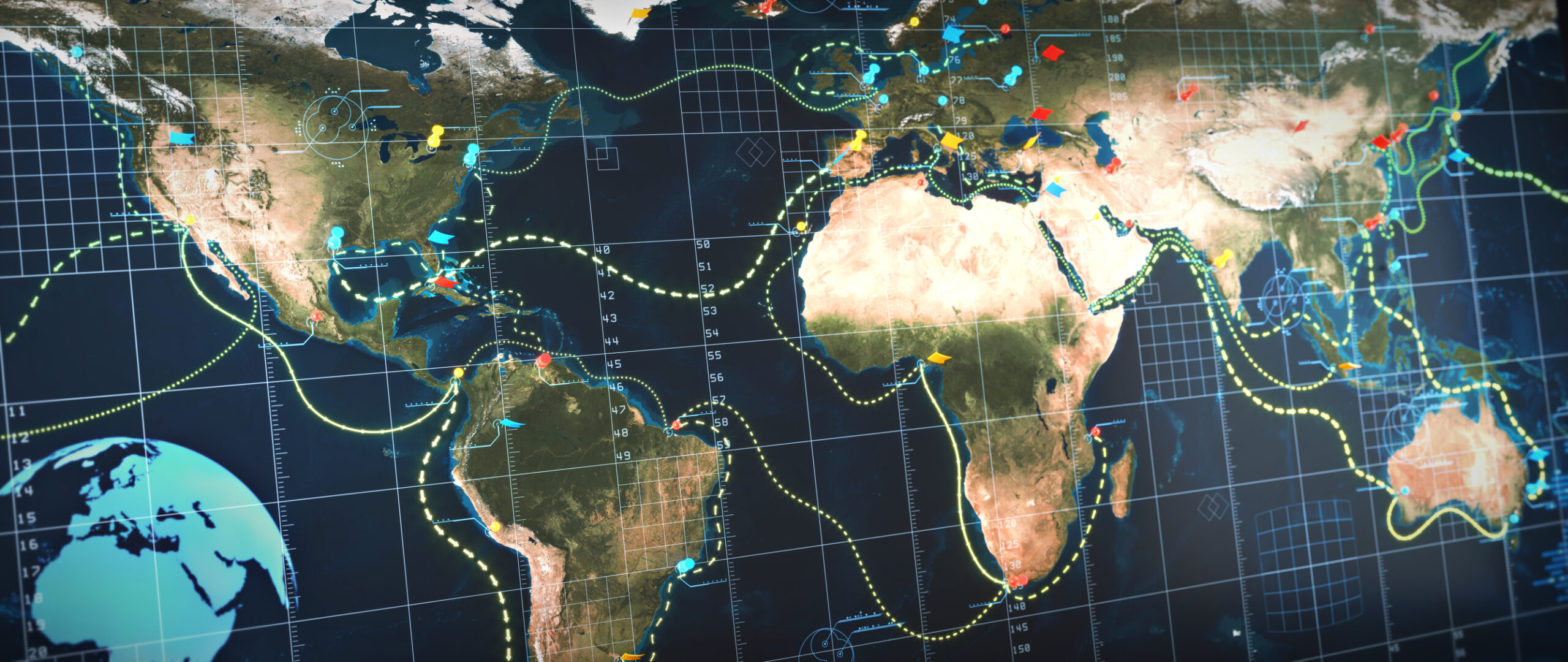
The escalation of conflict in the Middle East has triggered one of the most acute multi‑modal supply chain shocks since the Red Sea crisis. Simultaneous disruptions to critical maritime chokepoints and major air cargo hubs are already producing global ripple effects across capacity, transit times, costs, and congestion.
While the immediate impacts are concentrated in the Middle East, international shippers should expect knock‑on effects across major trade lanes in the coming weeks.
Ocean Freight Impacts
Most Middle Eastern ports remain operational, with the exception of Bahrain, and are prioritizing vessel berthing and cargo discharge where possible. However, conditions across the region remain highly volatile.
- Strait of Hormuz: Closed to commercial traffic, prompting widespread suspension of Gulf services and schedule disruptions.
- Red Sea / Suez Canal: Renewed Houthi threats have forced carriers to abandon tentative Red Sea resumptions and revert to Cape of Good Hope routings.
- Carrier Actions:
- Major carriers including MSC, CMA CGM, and OOCL have suspended most Middle East bookings, except for essential goods.
- Maersk vessels are fully booked, while Hapag‑Lloyd is experiencing severe space constraints.
- Jebel Ali: Temporary operational suspensions and ongoing congestion risks are compounding disruption across Gulf transshipment flows.
- Insurance & Risk:
- P&I clubs have cancelled war‑risk coverage across much of the region.
- Waters covering the Gulf of Oman are now excluded from insurance coverage.
- Service Reliability: There are currently no consistently reliable ocean services to or from the Gulf. Most carriers have stopped accepting new bookings.
Operational Considerations
- Shipments already in transit may be discharged at alternate ports under bill of lading liberties provisions, requiring customers to arrange onward delivery.
- Analysts expect carriers to aggressively apply surcharges not only on Gulf lanes, but globally (including Asia to U.S. trades) due to absorbed capacity, higher fuel costs, and congestion spillovers.
- Some ocean carriers are pausing annual fixed‑rate Trans‑Pacific contract negotiations as they reassess cost structures and capacity availability.
Potential Alternatives
- Discharge at non‑Gulf ports
- Land‑sea routings via Saudi Arabia and Oman (where feasible)
Air Freight Contingencies
The closure or severe restriction of Dubai and Doha (together representing approximately 18% of addressable global airfreight operations and ~4% of total global air cargo flows) has removed an estimated 16–18% of global air cargo capacity almost overnight.
- Airspace Restrictions:
- Commercial overflights remain largely prohibited over Iraq, Syria, Bahrain, Kuwait, and Israel.
- Airspace in Qatar, Jordan, and Saudi Arabia is partially open but subject to ongoing restrictions.
- Carrier Operations:
- Etihad, Emirates, and Qatar Airways have resumed limited services, with gradual ramp‑up underway.
- Full recovery is expected to take several weeks, with continued volatility due to airspace and security risks.
- Capacity Impact:
- Some trade lanes are experiencing low single‑digit disruption.
- Others (particularly India, South Asia, and Asia to Europe) are facing 50–70% capacity loss due to heavy reliance on Gulf hubs.
- Network Rebalancing:
- Cargo previously routed through the Middle East is being diverted via China, Hong Kong, and Europe.
- This reallocation is tightening global airfreight capacity beyond the region.
- Operational Constraints:
- While rerouting is theoretically possible, limitations around runway slots, ground handling, warehousing, aircraft maintenance, and crew positioning significantly restrict short‑term substitution.
Potential Alternatives
- Rerouting via Saudi Arabia, Oman, Egypt, or Turkey (subject to approvals and availability)
Shippers Should Be Aware Of
- Upward pressure on rates, including war‑risk and fuel surcharges
- Airlines increasingly requiring Priority or Express services to secure space
- Elevated risk of short‑notice flight cancellations and schedule changes
As always, eShipping will continue to monitor and communicate immediate steps to protect service continuity as the situation continues to evolve. Please contact your eShipping Account Manager with questions or contact our team HERE.